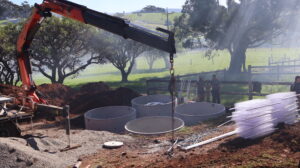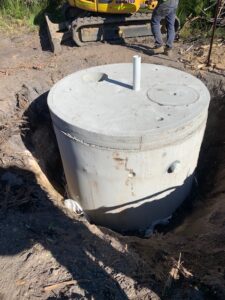
An in-ground concrete water tank can store a substantial volume of water without taking up the same visible space as an above-ground installation. Choosing the right tank, however, involves more than selecting the largest capacity available.
Bennett’s supplies in-ground concrete water tanks in several capacities. Before ordering, consider expected water use, available excavation area, access for delivery equipment and the finished ground level.
Available In-Ground Concrete Tank Sizes
The Bennett’s concrete tank range is designed for in-ground installation only. Available capacities and dimensions include:
- 10,150 litres with 300 mm riser and 150 mm thick lid: 2,850 mm high × 2,550 mm diameter.
- 10,150 litres with 75 mm thick lid: 2,475 mm high × 2,550 mm diameter.
- 5,000 litres with 75 mm thick lid: 2,250 mm high × 2,000 mm diameter.
- 3,600 litres with 75 mm thick lid: 2,050 mm high × 2,000 mm diameter.
- 2,550 litres with 75 mm thick lid: 1,600 mm high × 2,000 mm diameter.
- 2,050 litres: 1,600 mm high × 1,600 mm diameter.
How Much Water Storage Do You Need?
Start with the purpose of the stored water. Garden irrigation, toilet flushing, laundry use, livestock supply and broader household use can create very different demand levels. Roof catchment area and local rainfall also affect how quickly a tank can refill.
A larger tank may provide more resilience between rain events, but it also requires a larger excavation and suitable delivery access. It is worth balancing storage goals against the physical limits of the site.
Check the Site Before Ordering
Excavation and Ground Conditions
The excavation must suit the selected tank’s height and diameter, while allowing for the installation method and any specified base preparation. Soil type, groundwater and surrounding structures may affect the design. Seek site-specific advice where conditions are uncertain.
Delivery and Crane Access
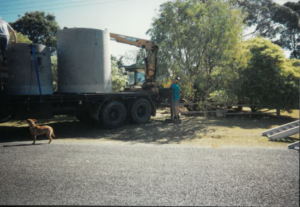
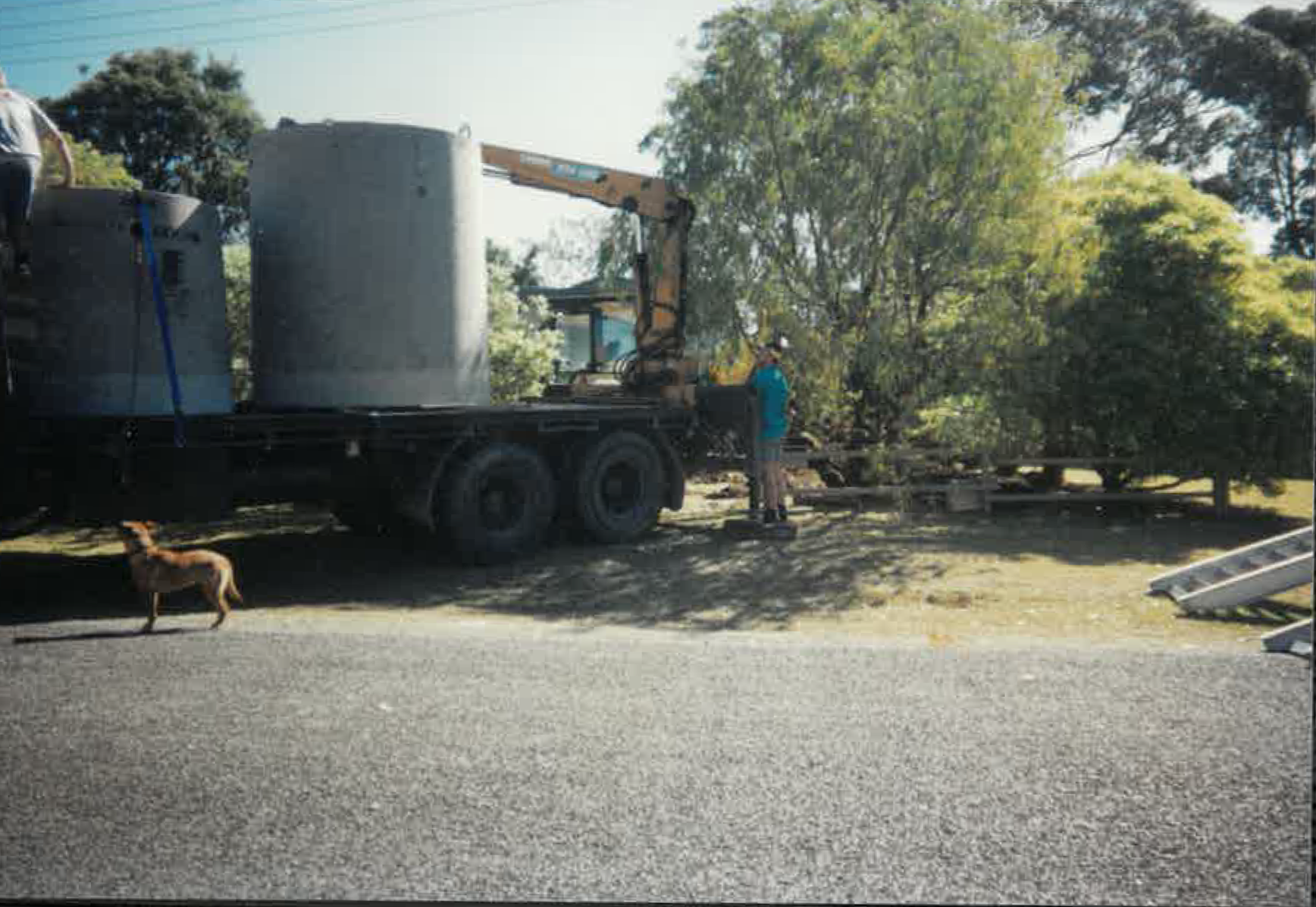
Concrete tanks are substantial products. Confirm that the delivery vehicle and lifting equipment can safely reach the installation area. Overhead services, narrow gates, soft ground, trees and nearby buildings can all affect access.
Finished Level and Riser Requirements
The tank opening must remain accessible after surrounding levels are completed. A riser may be needed where additional depth is required, while the lid specification must suit the intended installation. Do not assume that every lid is suitable for vehicle loading or other unusual loads; confirm the application with the supplier.
Plan Connections at the Same Time
Inlet, overflow, outlet and pump requirements should be considered before installation. Planning these connections early helps the tank integrate cleanly with roofwater collection, irrigation or the property’s broader water system.
Local Advice for Your Project
Bennett’s works with homeowners, builders and rural property owners across Nowra, the Shoalhaven, Ulladulla, Wollongong and the Southern Highlands. Contact the team with your preferred capacity, site location and access details to discuss the next step.